
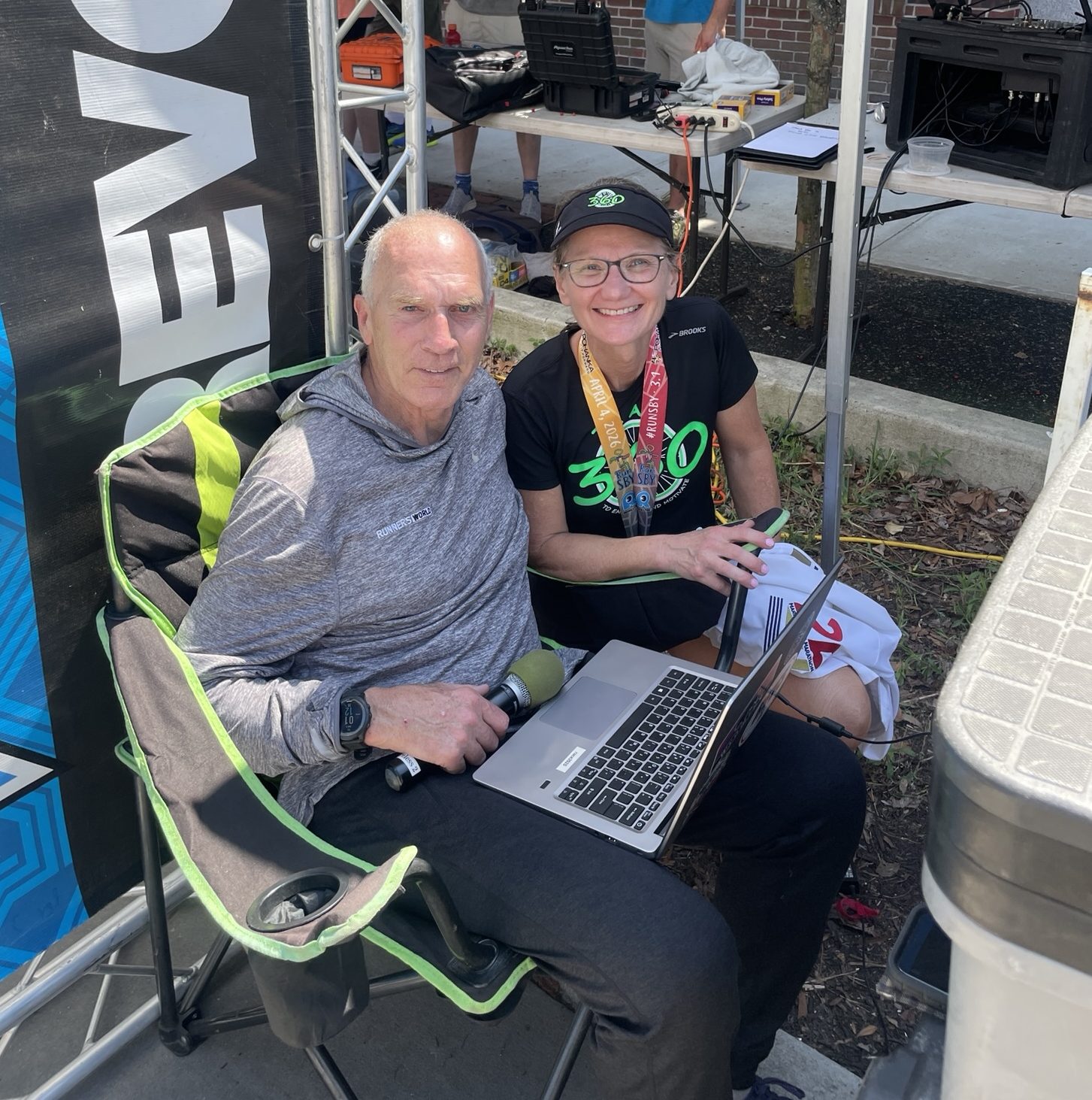
Usually we feature runners local to the Eastern Shore of Delmarva. We’re changing things up with this one as we feature Bart Yasso, the “mayor of running,” who makes a special trip each year to do the finish line announcing for the Salisbury Marathon events. Bart’s running career spans 50+ years around the globe.
Do you know the name Bart Yasso? If you’re a long-time runner, you most likely do, and you might have even run the Yasso 800s, probably the most famous workout named after someone. If you are fairly new to the sport, you’ll want to get to know Bart, because he’s been running for six decades and he has mountains of wisdom and experience to share.
“I wish we did selfies back in 1977,” Bart said recently, reflecting on the early days when his running gear consisted of a Budweiser t-shirt, cutoff jean shorts, with a belt (“a belt?” he said, laughing), tube socks and a beat-up pair of Keds. That first mile which felt a lot longer eventually turned into his first 10k with his brother George, who was much faster. But within a year, Bart was beating him and the making of a world class runner had begun.
We’re going to tell you about his running accolades, but he really wants you to know it’s all about the people. “You just don’t know the power of the sport and how it can change lives,” he said.
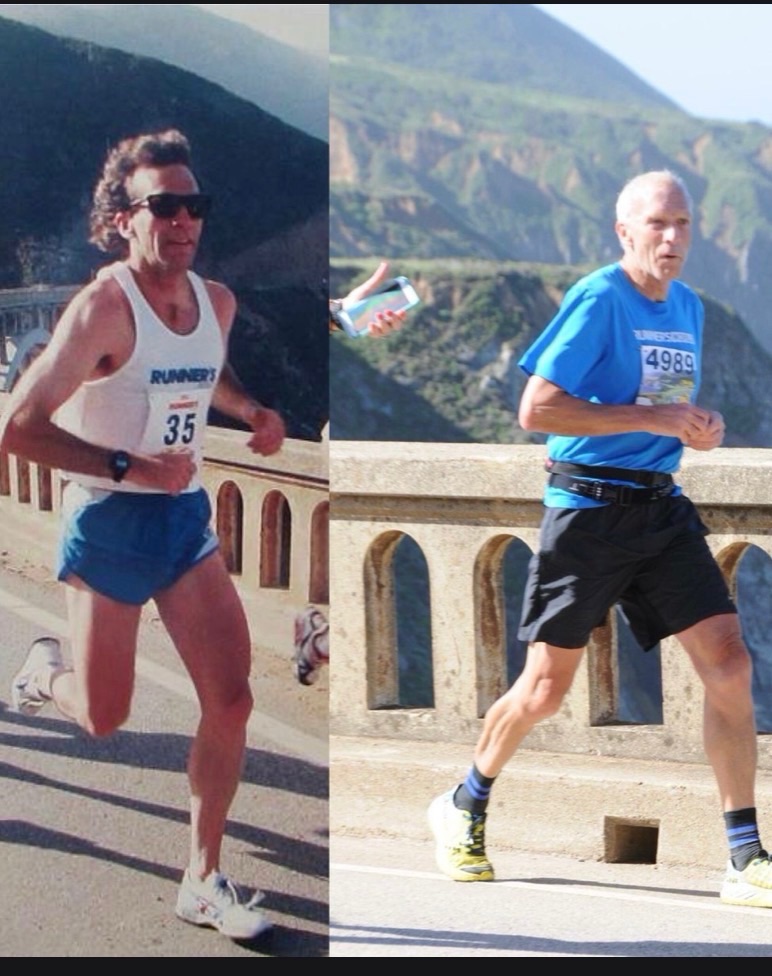
A lifelong resident of Pennsylvania, once he started running, it seems he didn’t sit still, traveling all over the world for races and soon representing Runner’s World magazine. His running resume is vast, having run on all seven continents, completed an Ironman five times, and the Badwater Ultramarathon through Death Valley. His marathon record was Boston in 2:40 but his watch said 2:39; that was in the days before chip timing. He recalled the NYC Marathon in the ‘80s when it took 10 minutes for the field of runners to pass the start line but that was included in your finish time.
“Most of us had the $9.99 Casio watch,” he continued. “You”d know a runner was committed when he had that. You’d start your time when you crossed the start line.” That way you’d know your exact time, even though the results might say differently.
Once he started running, the miles racked up quickly. “Everyone that was doing marathons was doing 100 miles a week,” so he did, too, but that’s how it was in the 1970s. “I wouldn’t encourage that,” he added, but “guys like Billy Rodgers and Amby Burfoot used to run 140 miles a week. That’s mind-boggling.”
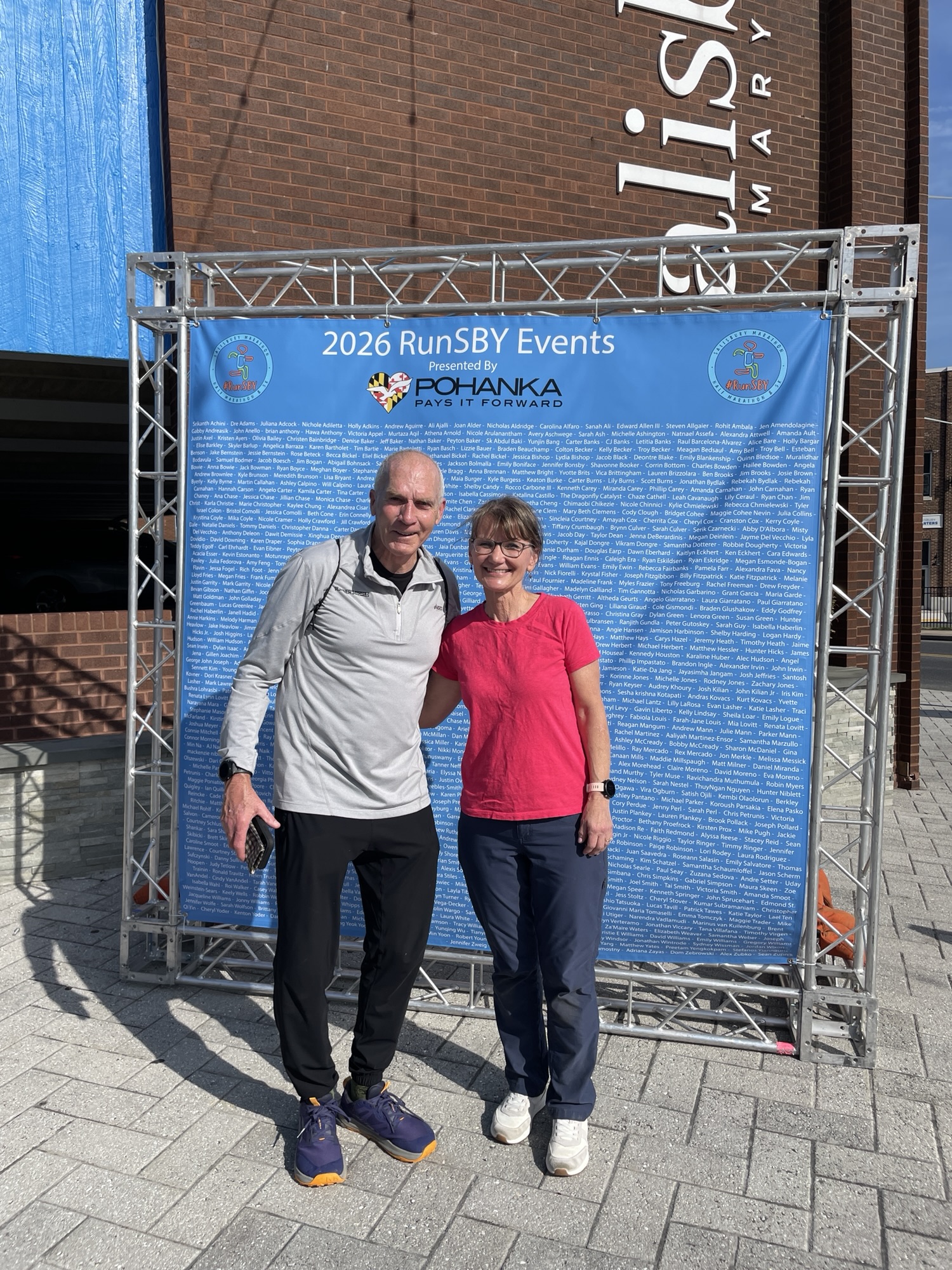
As I talked to Bart at the Salisbury finish line and then in a phone interview, it quickly felt like talking to an old friend. He is easy to talk to, loves to tell stories, and I easily understood why Runner’s World hired him to be the conduit between running events and the magazine. In the beginning, Bart said he worked with maybe 400 races; within two years, that grew to 4,000 events. He promoted the races; the races promoted the magazine. For the last 20 years of his 31-year career there, he was known as the Chief Running Officer. The magazine had 19 international editions and Bart flew all over. “I traveled a lot. I didn’t realize when I was doing it how arduous it was,” he reflected. There were times he missed family events, being stuck abroad or missing a day crossing the international date line, but his mom would hold a picture of him for the family photo so he was included. Now 71, he retired about 8.5 years ago and only travels if it’s just a few hours drive. Salisbury Marathon director Jason Chance asked Bart to do the finish line announcing a few years ago and Bart gladly makes the trip. His recall is incredible and he cheered a TEAM 360 special needs athlete by name this year.
A monumental change Bart said he has seen in the sport has been the inclusion of women, and just this week the running community is recalling Katherine Switzer’s Boston Marathon run in 1967 when officials tried to pull her off the course. In the mid-‘80s, women accounted for less than 20% of all runners; now it’s up to just over 50%.
It’s hard to believe now, but it took a while for women to embrace running and for men to accept them. Bart recalled race directing almost 50 years ago when the men running were mad they had to wait for a woman to finish a half marathon at more than 2 hours. That was slow to them, he said. “The whole sport was fast,” he said. But, “it wasn’t a fun sport when only 5% of the field were women. I think women didn’t feel like they were accepted.”
The women that joined the sport helped it steadily grow and now some races have more women than men, especially in ultras, and sometimes boast a higher finishing rate than men in ultras. Bart’s explanation: “Women just have some instinct that if something is wrong, they fix it,” such as getting out the stone in their shoe. Men, on the other hand, “get the blister! Women prepare more and carry out the logistics better.”
Now let’s talk about those Yasso 800s. Way back in 1993, the workout was featured in the magazine. I thought I understood it until I heard the grueling details. Bart’s favorite marathon training was a 3-mile warmup, a few strides, then 10 800-meter runs (twice around a track) with a 400-meter recovery in between, and a 3-mile cooldown. He found that the time he could consistently run each 800 (minutes and seconds) translated to the same time in hours and minutes for the marathon. His 2:40 for an 800-meter lap showed up as a 2:40 marathon time. Runner’s World editor Amby Burfoot decided to name it after Bart; his unusual last name would help the workout stick.
Now, 33 years later, Bart said there hasn’t been a day in his life that he hasn’t been asked about the Yasso 800s.
He regularly fields questions on that, but also on another topic that began to affect him in 1990 – Lyme disease. Where he lives in Pennsylvania has some of the highest incidences of Lyme disease in the country. It took six months for him to be correctly diagnosed because doctors didn’t really understand it in the early days. He has had difficult bouts through the years, and at one point, he endured two IV bags of antibiotics every day for a year to combat the disease. He said he’s seen a multitude of specialists and has done every kind of treatment. Once, while in Nairobi, he became extremely ill and the African doctors said it was nothing from that continent. He couldn’t walk across the room, he recalled. Doctors credited his recovery with his high fitness level, he said. Unless Lyme temporarily halted him, he stayed active. Nowadays, he walks, as running has been shelved because of Lyme. “I love single track trail running, but it is just not doable right now,” he explained. A few years ago, Bart participated in the Algonquin 50K here on the Shore, not finishing but a finish line is only one part of a race.
What has kept him going through his long career is the people. “When I was leaving Runner’s World after 31 years, all of a sudden I was getting all these requests for interviews,” he said, telling people that everything has an ending point. Definitely his health played a role. His list of accomplishments includes two solo, completely unsupported, bike trips across the United States, 160 miles a day for 20 days. That’s 3,200 miles. “It’s really a bunch of little small communities that make up the US,” he fondly said. After finishing his first cross-country trip, he rode his bike 25 miles to work the very next day.
Bart has been to all 50 states, including 20 times to Alaska and 35 times to Hawaii, and California, more than 100 times. He has run in more than 50 countries, but there’s no place like home. He still lives close to where he grew up.
He started finish line announcing somewhat accidentally, filling in at a west coast marathon and then it snowballed. He has traveled all over to announce runners, and who doesn’t like hearing their name called when you finally reach the finish? Technology helps make it extra special, and he can see notes next to a person’s name on the computer: birthday today, first marathon, 50th state, etc.
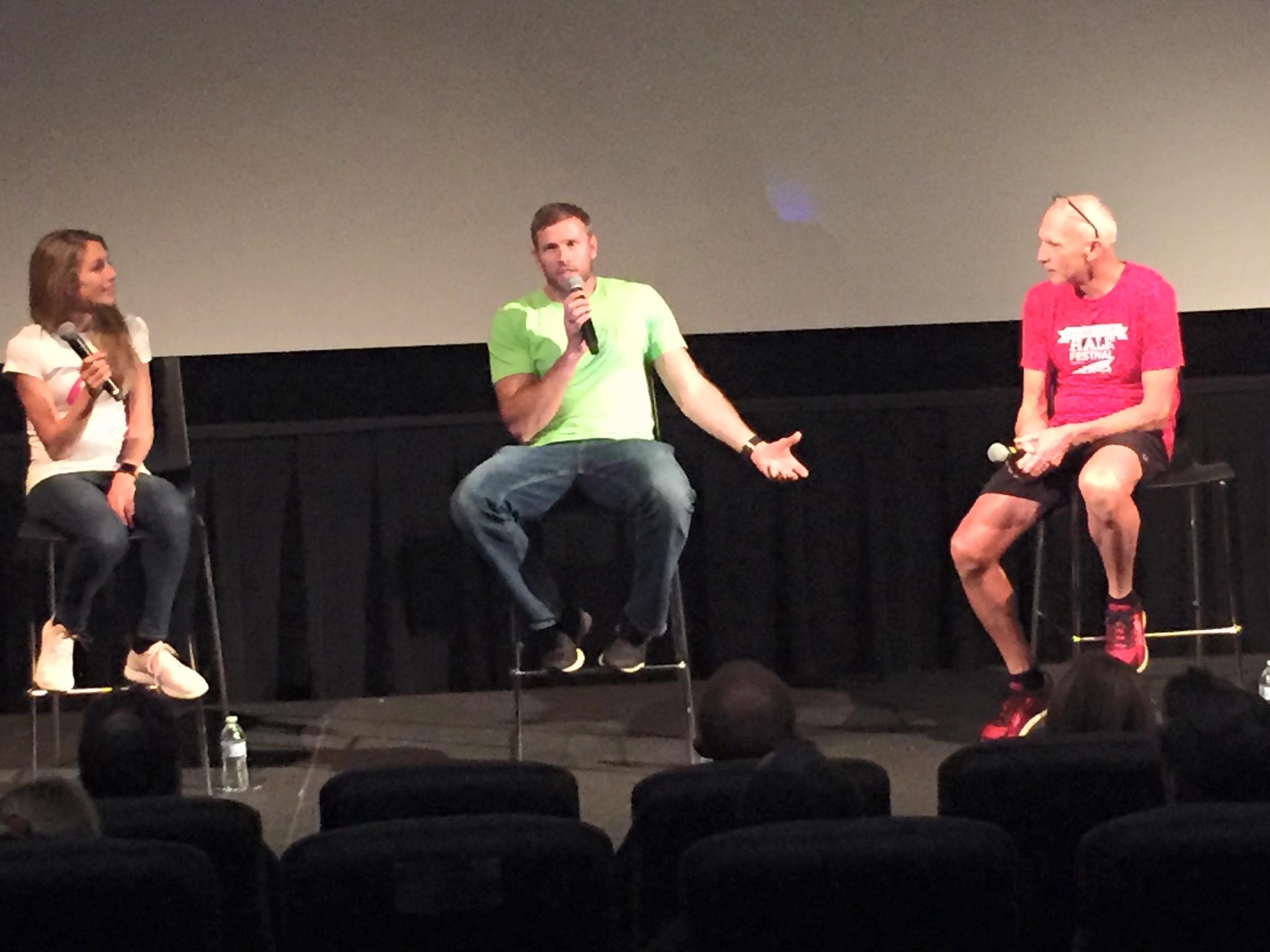
His message for everyone: “Runners don’t realize how inspirational they are to other people.” From neighbors to strangers on social media, people notice what you do and are affected. His work with races over the years sometimes had him talking at expos, meeting runners. A mom with an autistic son brought her son to hear Bart’s talk and then, to his surprise, he received an email from the mom. Bart said while at the magazine, he kept an open door policy; if his door was closed, it meant he was changing to run. But this time, that door was closed because of the emotion involved as he read that letter.
“The kid got me! How would I ever know that I touched this kid? He would be at my talks with his mom,” Bart said, adding that he ending up going to the young man’s town to do a 10k with him and his mom.
Here is that letter.
“I wish that I knew why I have no friends. I know that part of it is because I don’t understand how to be in social situations, but I just want friends my own age to like me. I wish Bart Yasso was my age. He’s a really good person and I think he’d be a great friend. He would be okay with me not knowing how to talk to people and he doesn’t make fun of me for liking video games a lot or for being awkward or for just not talking to people. He makes me feel like I’m not bad. I wish that other people would want to hang out with me like that. I wish that I could be around people and socialize with them like he does and I wish that I could be him, just for a day. Except for all of the running. I don’t want that.”
When I read that, I didn’t have a dry eye either.
“You don’t know who you touch,” Bart repeated. “You might inspire someone.”
Sometimes we do see the result of sharing our runs; maybe you’ve helped someone run a little farther, a little faster, or simply helped someone enjoy it more. Bart Yasso will tell you time and again to keep talking about running.
“Someone has to spread the love for the sport. It can help you be a better person,” he said. “Whatever you can do to make the world a better place, running can play a role in it.”
I wholeheartedly agree. Now, who wants to run Yasso 800s?
Books by Bart: 100 Runs of a Lifetime: the World’s Ultimate Races and Trails; and My Life on the Run: The Wit, Wisdom, and Insights of a Road Racing Icon
Discover more from Welcome to Run Delmarva
Subscribe to get the latest posts sent to your email.
 Welcome to Run Delmarva