
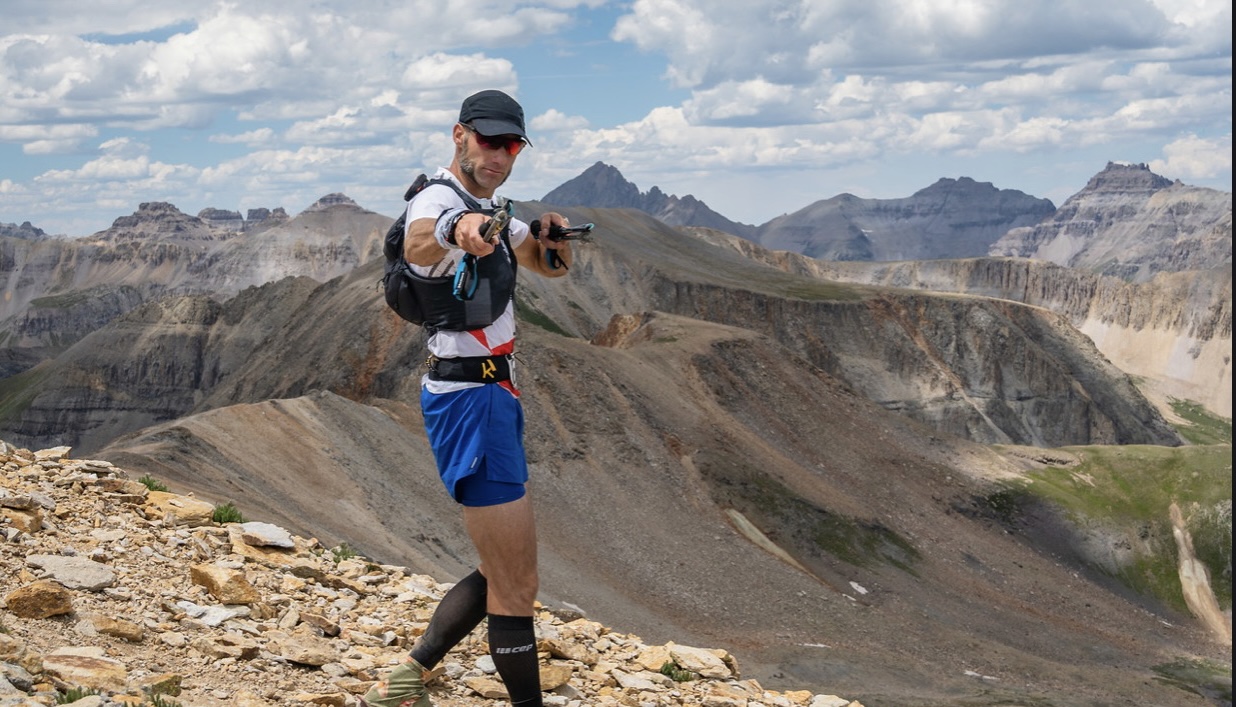
Gabe Matyiko of Sharpwtown likes to challenge himself, running ultras in Europe known for a high level of difficulty. Read his story and see how he makes it happen.
The standard first question: when did you start running?
I always ran when I was younger, mainly because I had lots of energy and was too uncoordinated to really excel at any other sport. From the age of 10 to high school, my dad would take me to a lot of the local 5K road races on the weekends which was a lot of fun. I ran cross country and track while at James M. Bennett high school. Joey DiCarlo and I are the same age and ran cross country together.
Do you have a training routine?
I am pretty hot and cold when it comes to training. If I don’t have a race on the schedule, I am sleeping in, not running a whole lot and doing other things with the little free time I have. However, when there is a race on the books, it’s a different story. Super in-depth training plans or online running coaches are not my thing, so I normally just print one off that I like online and get after it. I look for 100-mile training plans with six days on, one day off and mileages ranging 40-75 miles a week with hill work. I will do almost all of my running in the morning unless I have a work conflict, then it’s night miles before bed. I try not to skip any days or miles if I can avoid it.
You have done notable events around the world. Tell us about a couple! (UTMB?) How about FKTs?
In the world of Ultra Running, at the 100-mile distance there are three races that stand at the top, bucket list level events, if you will. Western States 100 in CA, the Hardrock 100 in CO, and the UTMB in Chamonix, France. In talking with other ultrarunners, I quickly figured out that to get into Western States or Hardrock 100, I would most likely have to dedicate a good 5 years (or more) of running qualifiers and repeatedly entering lotteries to even have a shot at getting into either of these races. Knowing that, I quickly shifted my focus to earning my slot to run in the UTMB (Ultra Trail Mont Blanc).
Like the other two races, UTMB also requires you to earn points via an elaborate system of running official UTMB qualifying races. One such race that I ran was the Ultra Trail Snowdonia, or UTS 165 (km) in 2021. Trent Swanson and I flew over to Wales for this amazing event. I ran the 165 km race and Trent ran the 50 km distance. The Welsh country side in Snowdonia National Park was incredibly difficult terrain to run and I quickly learned that Europeans have a completely different style of putting on ultramarathon events. Most races do not allow pacers (which wasn’t an issue for me because I hardly ever use them anyway) and this race only allowed one drop bag location at mile 50! Course markings can also be pretty sparse and almost every race at the 100 mile distance has a hefty mandatory kit requirement which is indicative of how self-sufficient you need to be with the expectation that participating in these events requires a certain level of back country proficiency. They definitely don’t hold your hand.
The following year in 2022, after running all my qualifying races and applying to the lottery for my second time, I earned a spot in the UTMB. I took my family over for a two-week vacation through Switzerland, finishing up in Chamonix, France for the race. The course takes you around the Mont Blanc Mountain range, passing through France, Italy and Switzerland during the race. Part of your mandatory kit is to have your passport in case of an issue, drop or medical emergency. Crossing the finish line at the base of the French Alps with my family will probably forever be one of my most amazing and cherished memories.
There have been so many other amazing ultrarunning experiences; it’s hard to just pick a few. Establishing the Assateague End to End route with Trent back in 2015 was special, we just didn’t realize how special until years later. Setting the official FKT on that route in 2022 and running the R2R2R in the Grand Canyon are probably the other big highlights for me so far.
Every distance has its own mental challenge, but these ultras are in their own category. How do you keep going?
The key for me is putting in the work so I have the confidence the day of the race to know that I belong on that starting line with the rest of the runners regardless of what elevation I train at or how flat the Eastern Shore is. After that, it’s staying focused from start to finish whether it’s 6 hours or 50 hours, you have to be on it and engaged mentally. Don’t zone out, forget to drink, eat, layer up, layer off, take salt tabs, always need to be looking for course markers, know the distances between aid stations, where the big climbs and descents are, strategize what you need to grab or dump before you get to your drop bag…. be present every minute of the race as much as possible and more things will go right then wrong. The last thing for me is the most important. Always try to be positive. As soon as the negativity creeps in, figure out a way to turn your attitude around or listen to music. Enjoy the experience even if you’re grinding; set small goals throughout the race and celebrate each victory even if it is as simple as making it to the next aid station or finishing a climb without stopping. Be grateful in the moment and don’t squander the months of training and sacrifice being away from your loved ones. I don’t like DNF’s.
How do you keep injuries at bay with so many miles?
I don’t put down as many miles as some folks do throughout the course of the year since I am not running unless actively training for a race. That being said, I love the idea of functional fitness and staying active in any way possible whether it’s yard work, mountain biking, kitesurfing or surfing. The main issue is finding the time to fit it in which is why I like to take time off from running. I am 45 with a pretty physically demanding job that has beat me up pretty good over the years. Being tall and lifting heavy things, I struggle with lower back issues. In 2019 I had meniscus surgery on my left knee due to a work injury, and in 2021 I tore all the ligaments in my right ankle during a mountain bike crash.
I have a strong team of professionals that I lean on to keep me going while training and to help me bounce back when I am recovering from an injury. I try to make quarterly visits to the chiropractor though out the year or go as needed to stay on top of my back issues. When recovering from an injury or even if I feel like my body is telling me something is wrong, I run in to see one of the many amazing local physical therapists in the area. And, of course, last but not least, regular massage therapy sessions are a big part of my regiment monthly while training, upping that to once every two weeks, two months out from a big race.
You direct the DUC – Delmarva Ultra Challenge which is an iconic running event coupled with the Algonquin 50k. Why did you start that?
So after two years of putting on the Algonquin 50K (subsequently the only two years I have ever run the race!), Trent and I were talking about how we could elevate the event and offer a longer distance alternative to the 50K. It was pretty evident early on that the Algonquin had a unique vibe with an electric atmosphere that was the main draw for most runners, however the difficulty of the race itself and the terrain really was not the event’s strong suit. So the question was, how can we attract those trail runners to the Eastern Shore that come from areas that have longer trails, mountains, more varied terrain and are looking for a challenge? The answer was to get as creative as possible, think outside the box, and come up with an original idea that still allowed the runners to participate in the Algonquin 50K with everyone else and not miss out on the magic of the finish at Milburn Landing.
Most people that attend Algonquin Ultra’s events don’t realize how much brainstorming and planning goes on when creating and tweaking these events to make sure they are unique, fun and well-run. Trent and I drive a lot for work, so needless to say, hours of these brainstorming sessions happen on the regular. (Just imagine how much Trent talks running and races considering I am just one of a whole handful of ALQ Ultras crew members!) It was in this fashion that we came up with the current format for the DUC 100K, which is best described as “Race Director suicide.” Create a different 50K course every year that no one has run before, during the worst weather window possible, at night, with limited volunteers (most everyone is volunteering the following morning at the Algonquin), limit your race to only 25-30 people so you’re guaranteed to lose money every year … let’s just say it’s been a wild ride with highs and lows and no one to blame but myself ! 😊
Do you prepare for Pemberton 24 emcee duties or does that come naturally?
I would love to say that I prepare for months to keep everyone entertained and awake for 24 hours but that would just be a lie!
What’s next on your schedule?
In July, I am running the Jigger Johnson 100 in Waterville Valley, NH. This is the only 100 mile race in the White Mountains; it has no course markings, no crew allowed, around 33,000’ of climbing, a 54 hour cut off and last year a DNF rate of 70%. (My kind of race!) In August, I am going to link up with Michael Coutu and run the Eastern States 100 in PA.
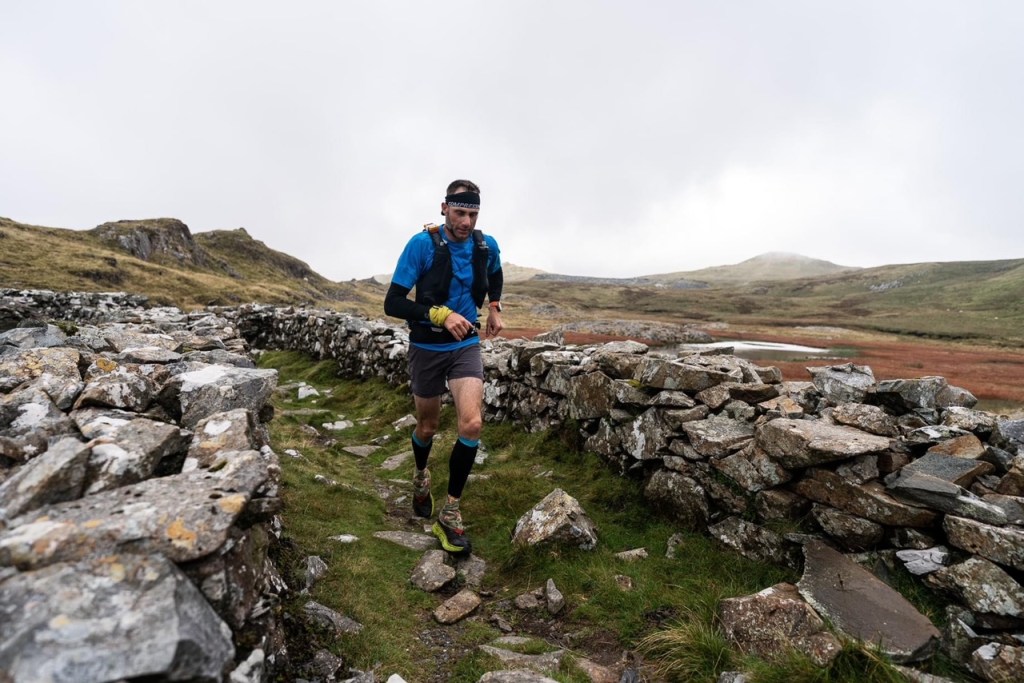
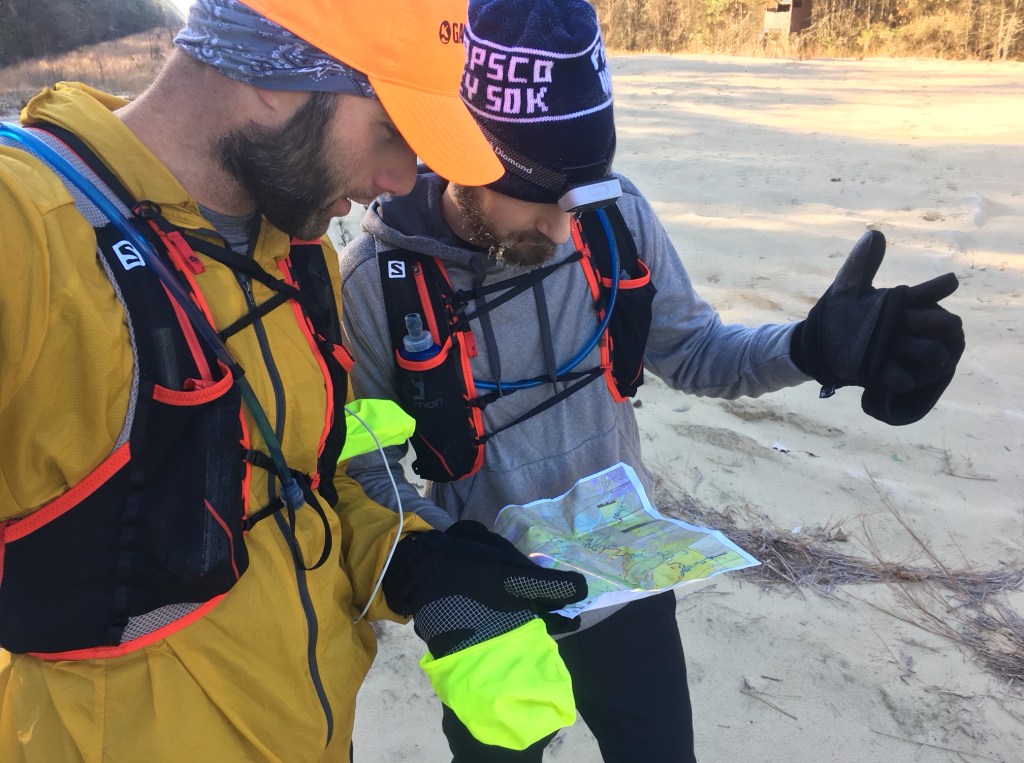

Left to right:
Pic 1: Running in Wales for the UTS 165 (km)
Pic 2: Jordan Gilsdorf and I completed the first complete start to finish run through of the now infamous Algonquin 50k course. Trent and Brian Swift finalized the route, gave us a map and off we went. We made a few wrong turns and added 4 extra miles but having the honor of first tracks made it all good!
Pic 3: Closing in on the finish line with my daughter Lucy at the UTMB in Chamonix France.
Discover more from Welcome to Run Delmarva
Subscribe to get the latest posts sent to your email.
 Welcome to Run Delmarva