
Gavin Furlong of Delaware has wise advice about not ignoring signs something is wrong. Read about his cancer diagnosis and how he is doing now.
How did you become a runner?
I started running in 2018, solely to keep up with my son Nolan. He was only 5 at the time, had entered his first 5k with my wife when he was 4, and was already showing promise as a distance runner. I knew if I sat on the sideline for much longer, he would be faster than me in no time and there would be no catching up. Nolan turns 11 in a few weeks and I can still hold him off in a 5k, but he is not far behind!
Do you prefer roads or trails? Do you run many local races?
I would say its a 50/50 split between road and trail running. I really like trail running, assuming it’s not too technical, but also like to get into a groove and knock out miles on pavement. Fortunately we live close to the Lewes/Georgetown multi-use trail and can easily go for miles on a paved path without traffic.
I enter some local races. When I started running in 2018 and for a few years after, our family would all enter 5Ks almost every weekend. As I grew as a runner, I started to gravitate to longer distances until I eventually caught the ultra-marathon bug. I enter a lot fewer races now, focusing on those that I know will challenge me or support a cause important to me and my family.
You were diagnosed with cancer at only 38. Now you are speaking out about early detection. How were you diagnosed?
I was diagnosed with colorectal cancer in 2021 at age 38. I was very fortunate to show a symptom (blood in stool) that at first I ignored, thinking it was the result of a recent dietary change. It stopped for awhile, but when it returned I told my primary care physician about it. That led to a consult with a gastroenterologist and then a colonoscopy. The colonoscopy found a suspicious looking polyp that was removed during the procedure. The polyp turned out to be cancerous and had spread into the wall of my colon. The intervention at this point is what is called a bowel resection, where a surgeon removes the cancerous section of the colon and reconnects the healthy sections together. From all the scans and tests I had done prior to the surgery it did not look like the cancer had spread beyond the intestinal wall, but there was no guarantee until the surgery was completed and the surrounding tissues could be tested. The good news is the surgery was successful, the cancer had not spread and I did not require any radiation treatment.
Prior to my diagnosis I didn’t know much about colorectal cancer, other than that you should have a colonoscopy when you turn 50. That was 12 years away and certainly not top of mind. After my diagnosis, I started to research the disease to see why I had been affected so early and learned that colorectal cancer, while decreasing in older adults, is significantly increasing in young adults in their 30s and 40s. Research does not know exactly why this is happening, but it is strongly suspected that a sedentary lifestyle along with a diet high in processed foods is to blame. I consider myself to have a healthy diet now, but like a lot of others who grew up in the 80s and 90s, I ate processed foods just about exclusively.
The good news for me is that my body gave me a clue something was wrong. Many are not so lucky, and I often think about how different my life may have been if I didn’t have a symptom and did not discover the cancer until it had progressed. Every day I realize how lucky I am, and therefore want to do what I can to educate others on this disease, its signs and symptoms and the importance of regular screenings.
What was your treatment like? Were you able to continue running?
Since my treatment only required surgery, I was able to return to activity pretty quickly. I tried to go into surgery as healthy as possible in hopes of a speedy recovery. I rode an indoor bike within a few days of coming home from the hospital, which was probably a bad idea, but it helped me mentally. My doctors said it would take my body about 6 months to fully adjust to the new modifications, and I would say it took about a year. Running was a challenge for that first year, and I did have some dark days when I was not sure it would ever be part of my life again. On a random weekday in March 2022, 1 year after my surgery, I woke up feeling strong and decided to try a longer distance run. I ended up completing a marathon distance route from my house. It was pretty slow and I alternated running and walking but I got it done. That day was a big confidence boost and made me believe I could get back into the distance running I enjoyed so much.
You are race director for the Blue Ribbon Run-A-Thon to raise awareness for colorectal cancer on March 23. The cost to sign up for the run-a-thon is modest; how will funds be raised and where will they be donated?
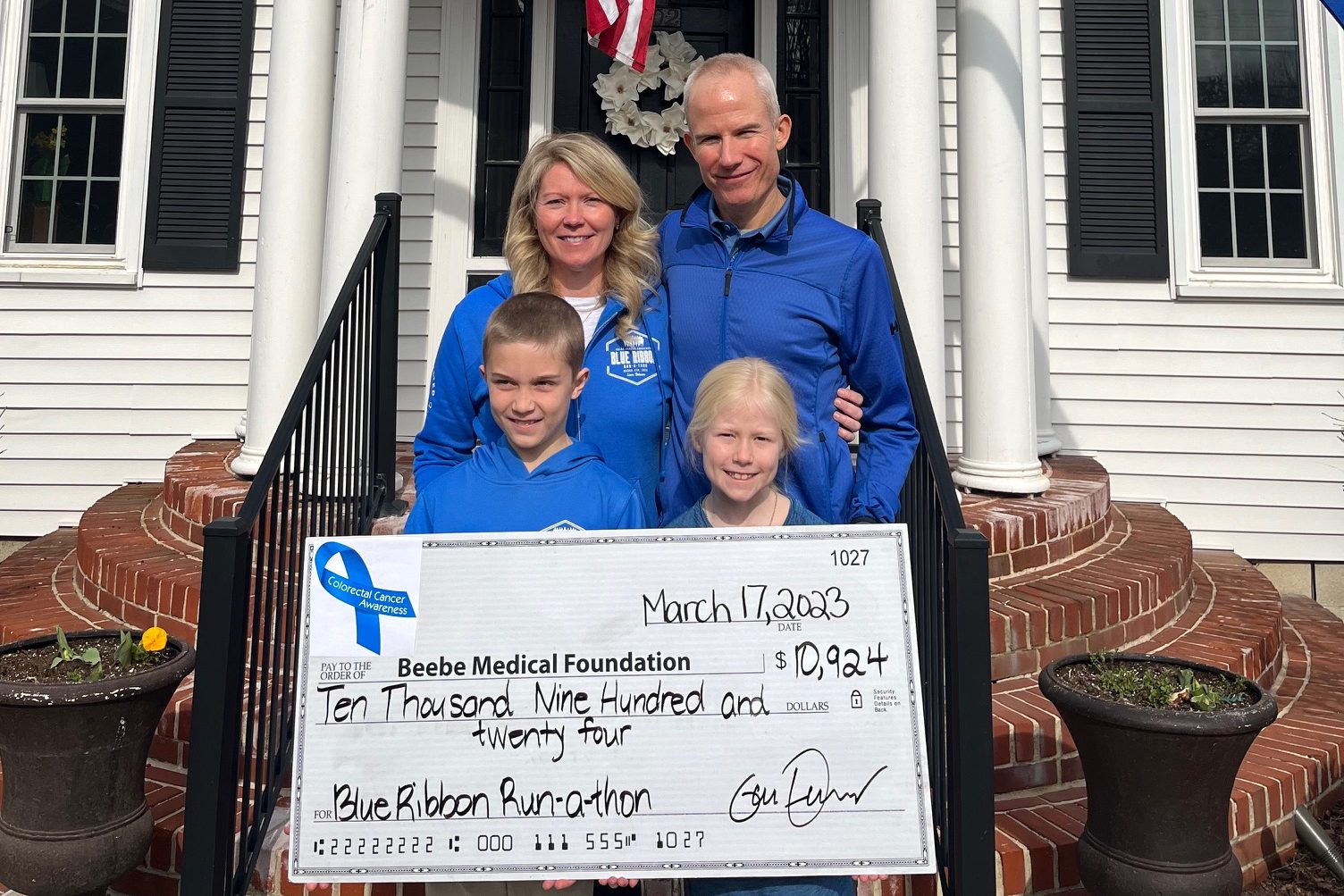
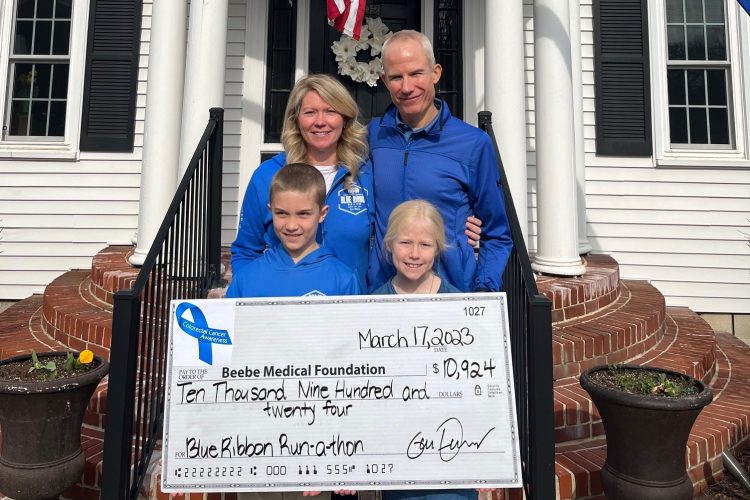
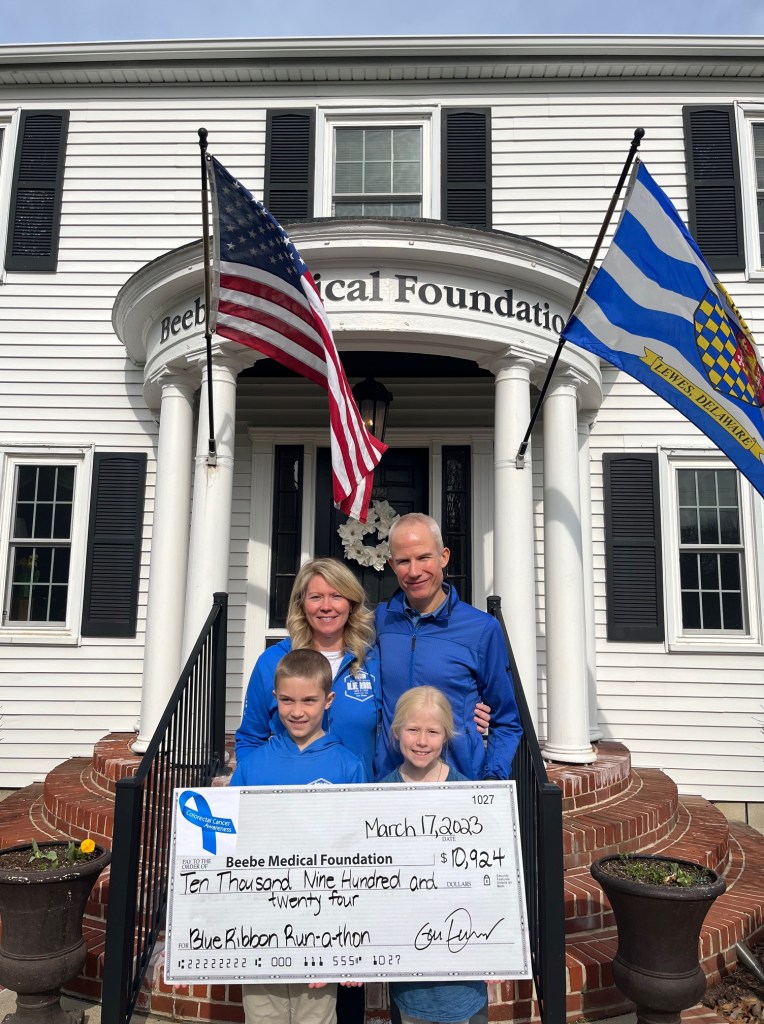
I wanted to keep the cost of the Run-A-Thon down so that many can participate. 100% of the registration fees, along with donations we receive from individuals and our corporate sponsors, are donated to the Beebe Medical Foundation, the fundraising arm of Beebe Hospital where I was treated. The funds raised specifically go to the Population Health department and are used for public education and awareness campaigns in our local communities.
Last year’s run-a-thon was a different format over a 24-hour period. How many miles did you run? Is that a distance PR for you?
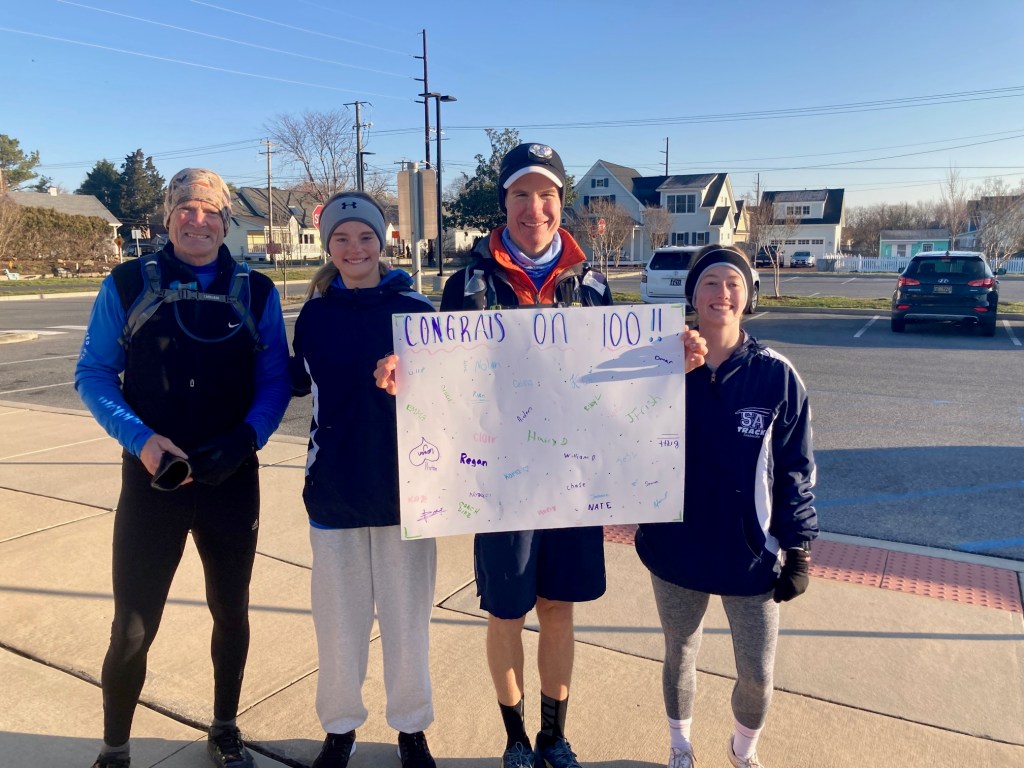
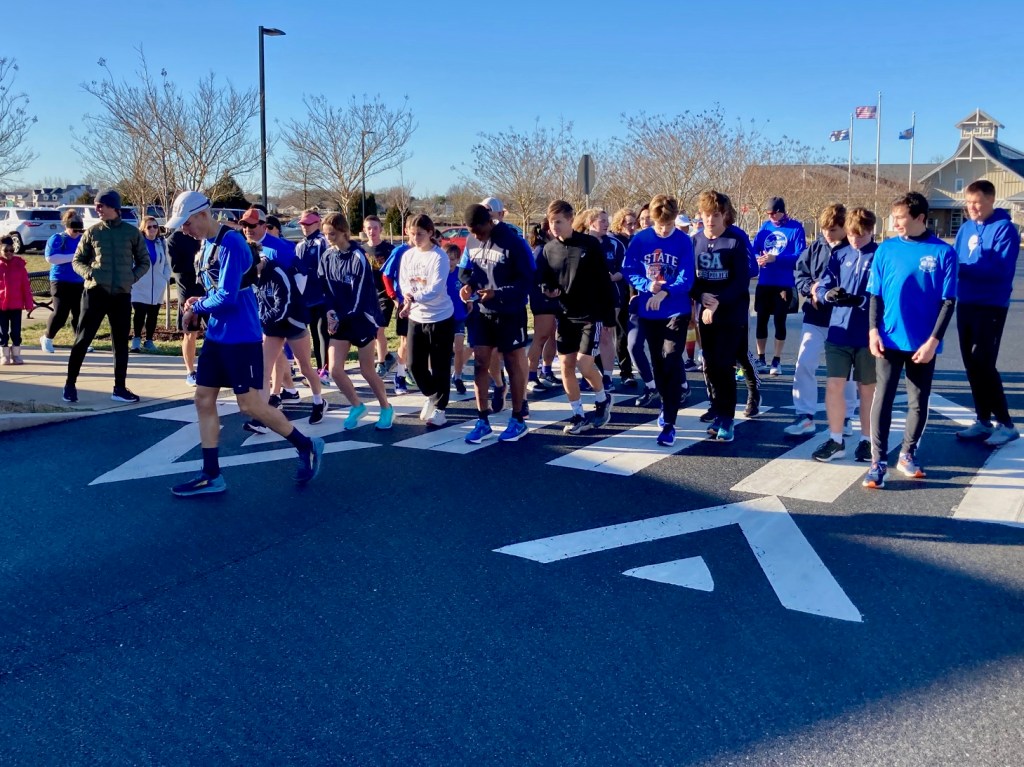
Prior to my cancer diagnosis, I was training for my first 100 mile ultramarathon. Last year’s Blue Ribbon Run-A-Thon, held on the 2-year anniversary of my surgery, was centered around a personal goal of completing 100 miles in under 24 hours and proving to myself that cancer would not hold me back. The course was six 16.5 mile loops from Lewes to Rehoboth and back. We had about 50 participants last year who ran alongside me during the 24 hours as pacers. I completed the 100 miles in a little over 23 hours and am proud of that accomplishment, but am more proud of the $11,000 that we raised for colorectal cancer awareness in that first year.
Last year’s Run-A-Thon is the only 100 mile endeavor I have taken on to date, but I am signed up for the Virginia 24-hour Run for Cancer in late April and hope to go over 100 miles during that event.
Anything else you’d like to add about yourself?
For the past 4 years, I have been coaching with the Seashore Striders youth Cross Country team in Lewes, and 2 years ago, I starting coaching the Sussex Academy Cross Country team in Georgetown. I like to be out there running with the athletes during practice, and making the transition from running with elementary-age kids to high school runners was eye opening! That first season training with SA in 2022 will always be special to me. Those kids helped me get back on my feet and I’m not sure I would be where I am without them.
Discover more from Welcome to Run Delmarva
Subscribe to get the latest posts sent to your email.
 Welcome to Run Delmarva